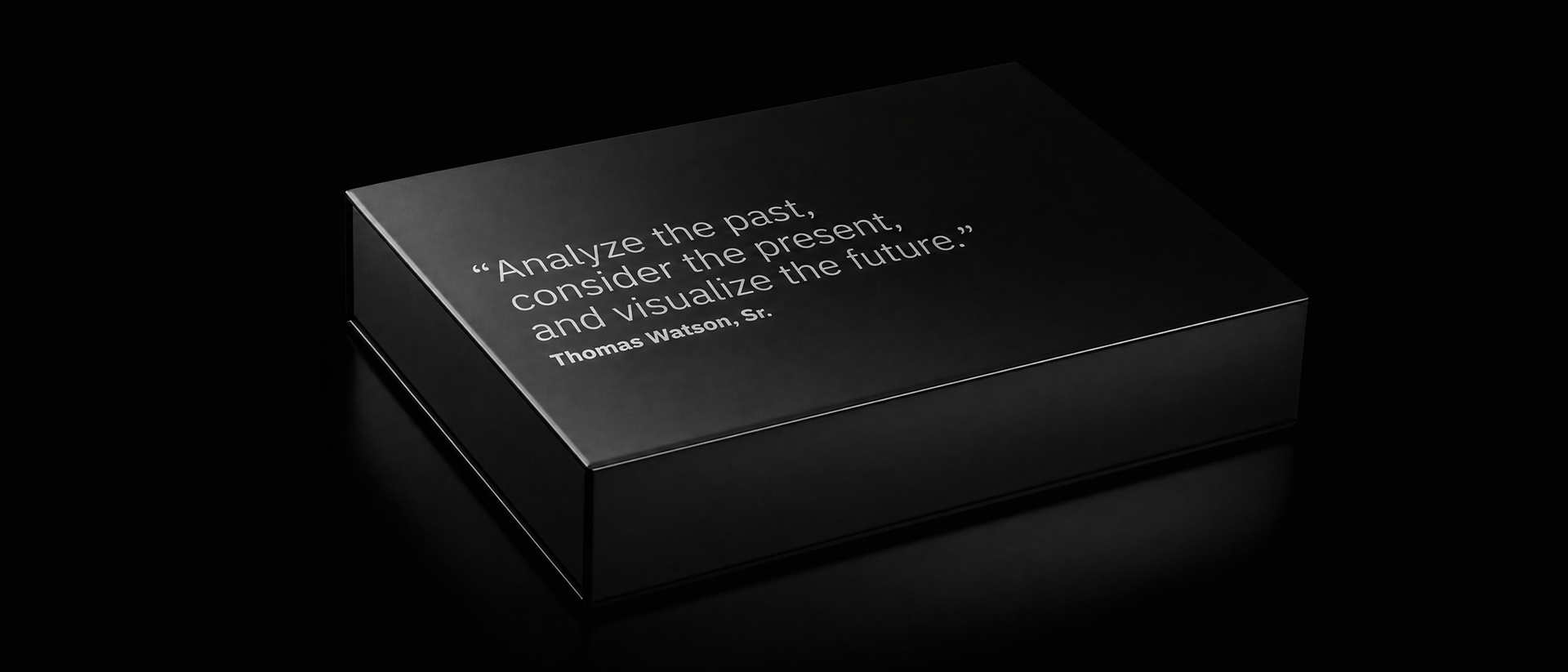
Enterprise software renewals are a moment of genuine risk. The client already knows the product. What they need is a reason to re-commit, not a spec sheet. This campaign was built around a single insight: the people who decide on renewals are busy, skeptical of marketing, and unmoved by email. So we didn't send an email.
We sent a box.
The outer packaging was deliberately minimal. No product name, no promotional language, nothing that signals "marketing mailer" and earns an immediate trip to the trash. Just enough presence to create curiosity. The kind of object you put on your desk and come back to.
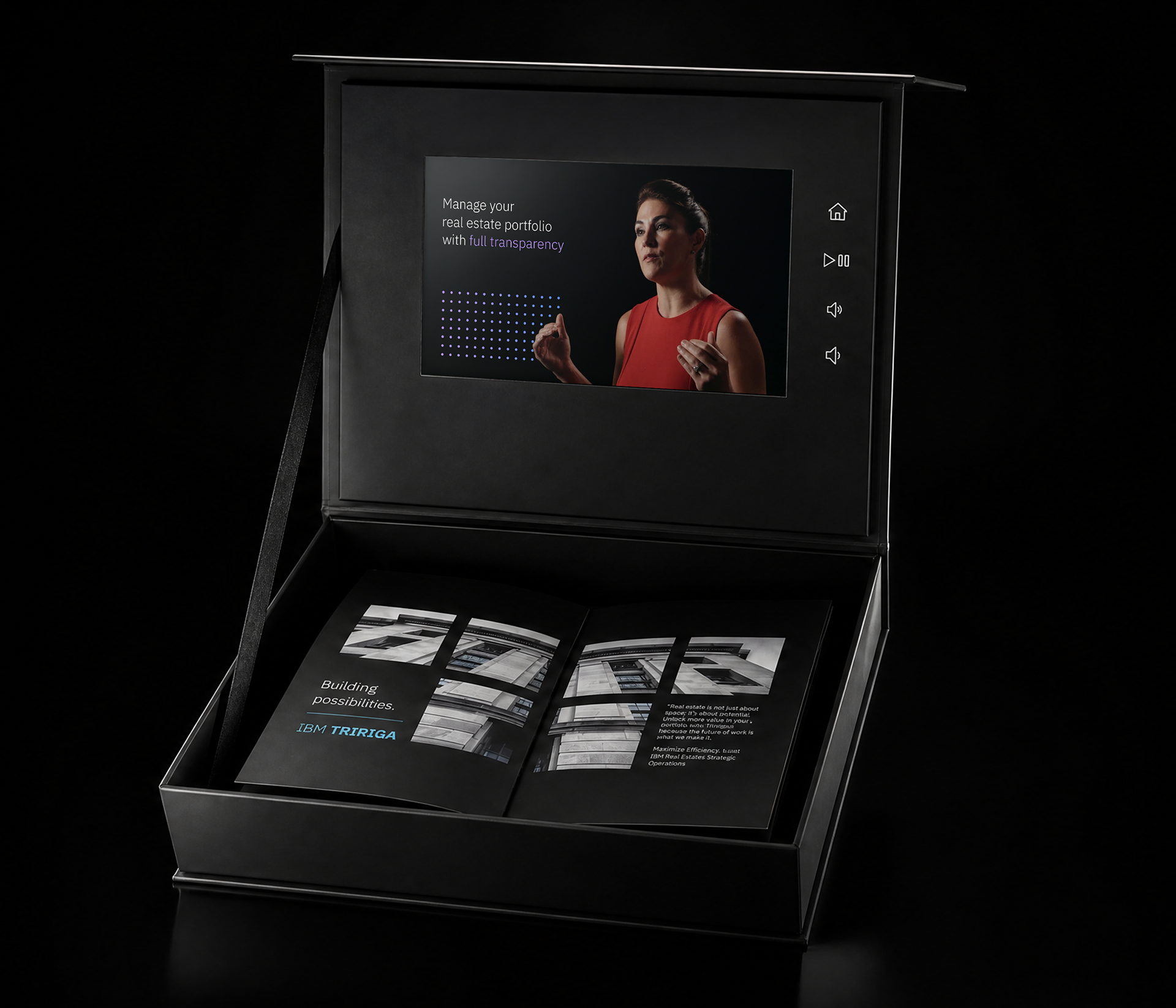
When the recipient opens it, the box opens back. A built-in screen activates automatically and plays a video that addresses them by name, speaking directly to their organization, context, and renewal. Not a product demo. A conversation.
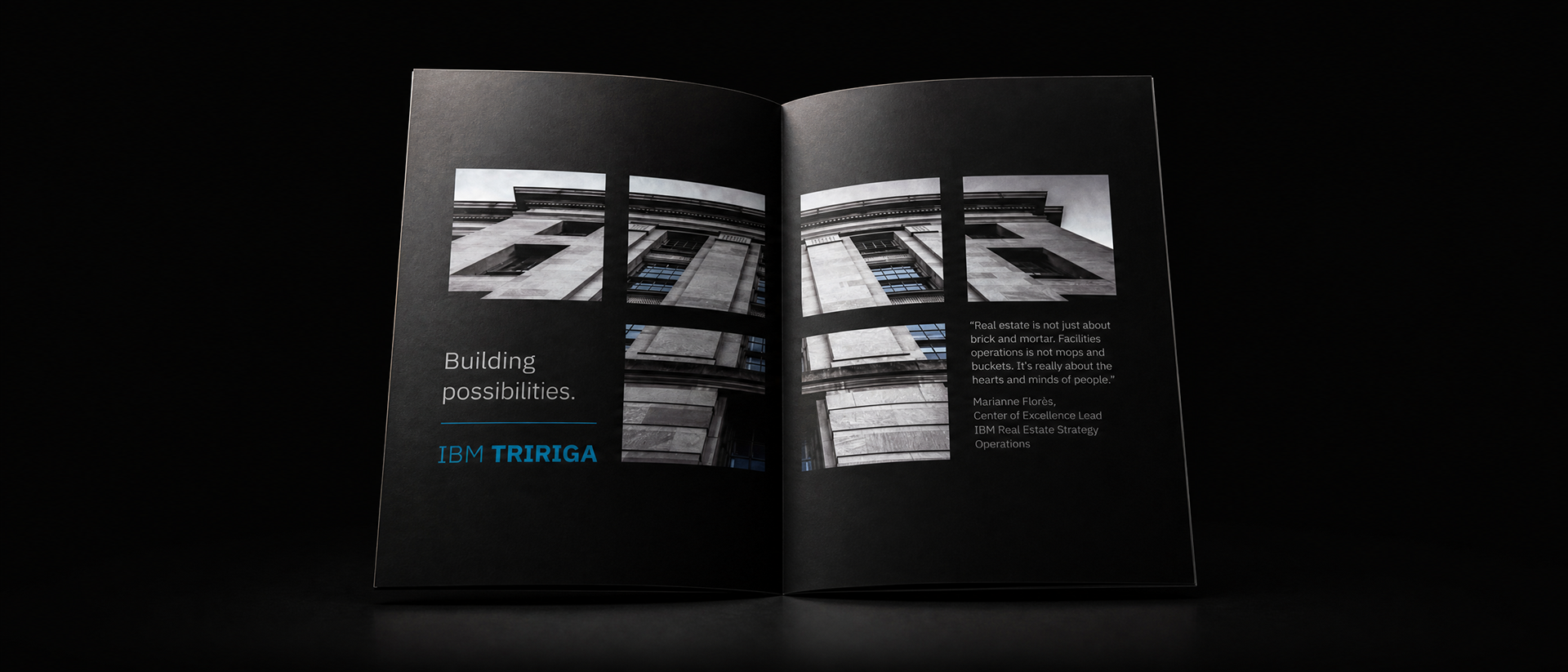
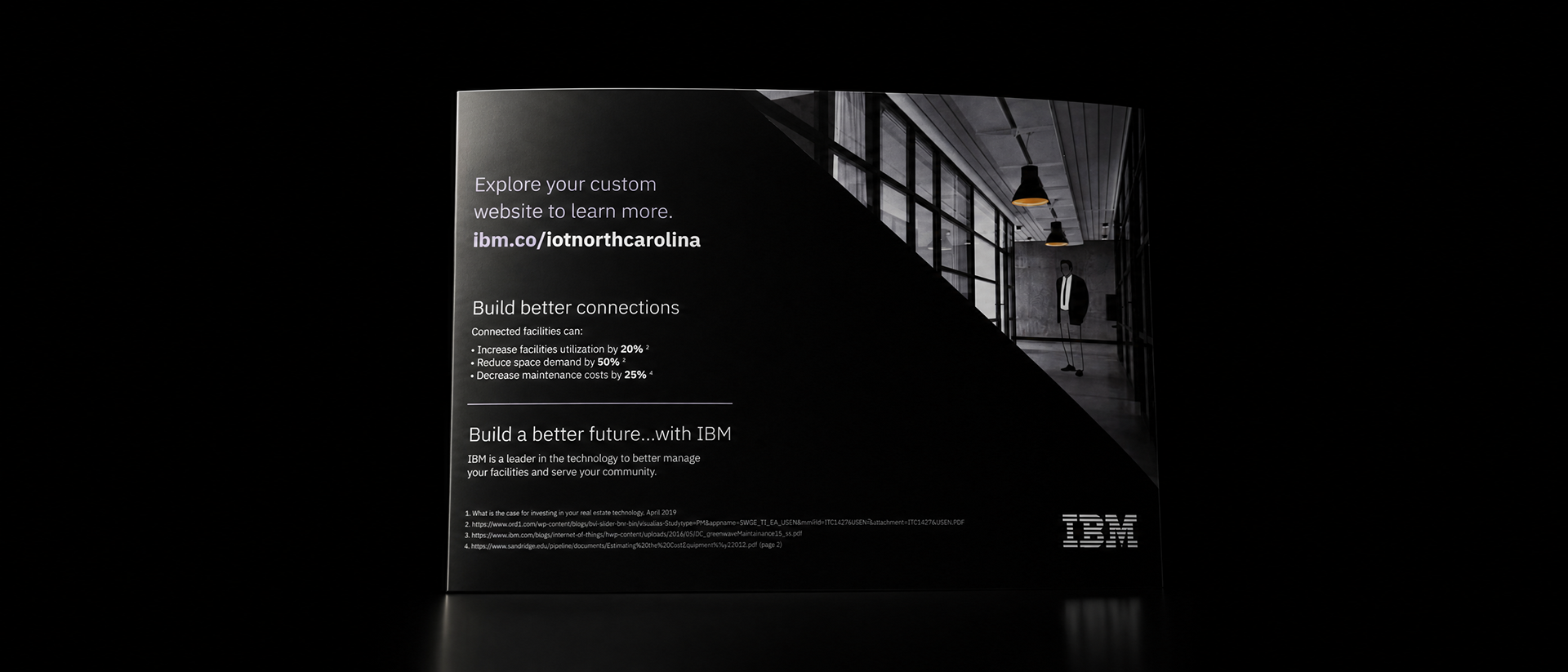
Inside the box: a printed lookbook reinforcing the IBM TRIRIGA brand story, anchored by the campaign line "Building Possibilities." The Thomas Watson Sr. quote on the lid, "Analyze the past, consider the present, and visualize the future." sets the tone before a single page is turned. It earns the product conversation rather than forcing it.
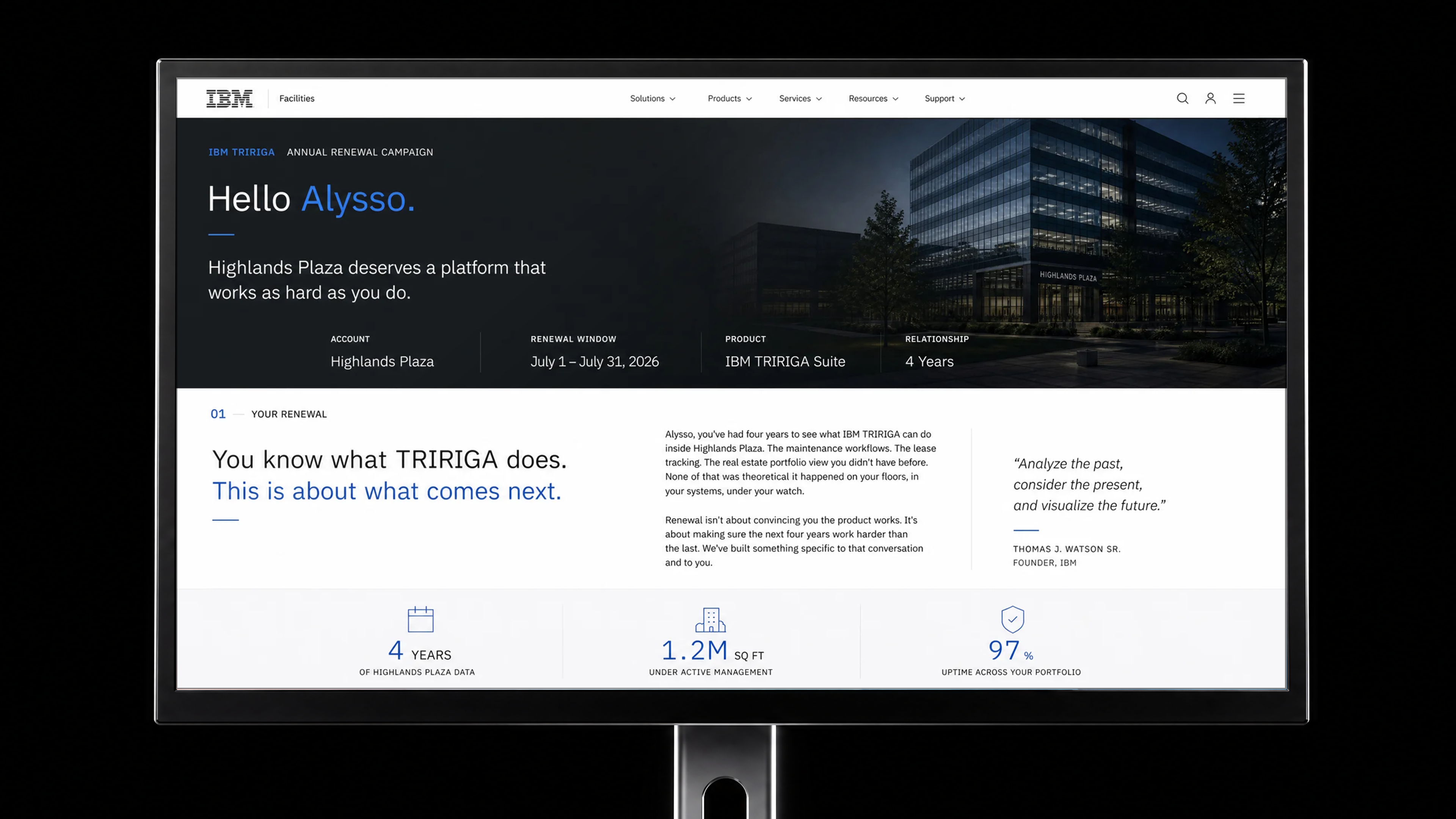
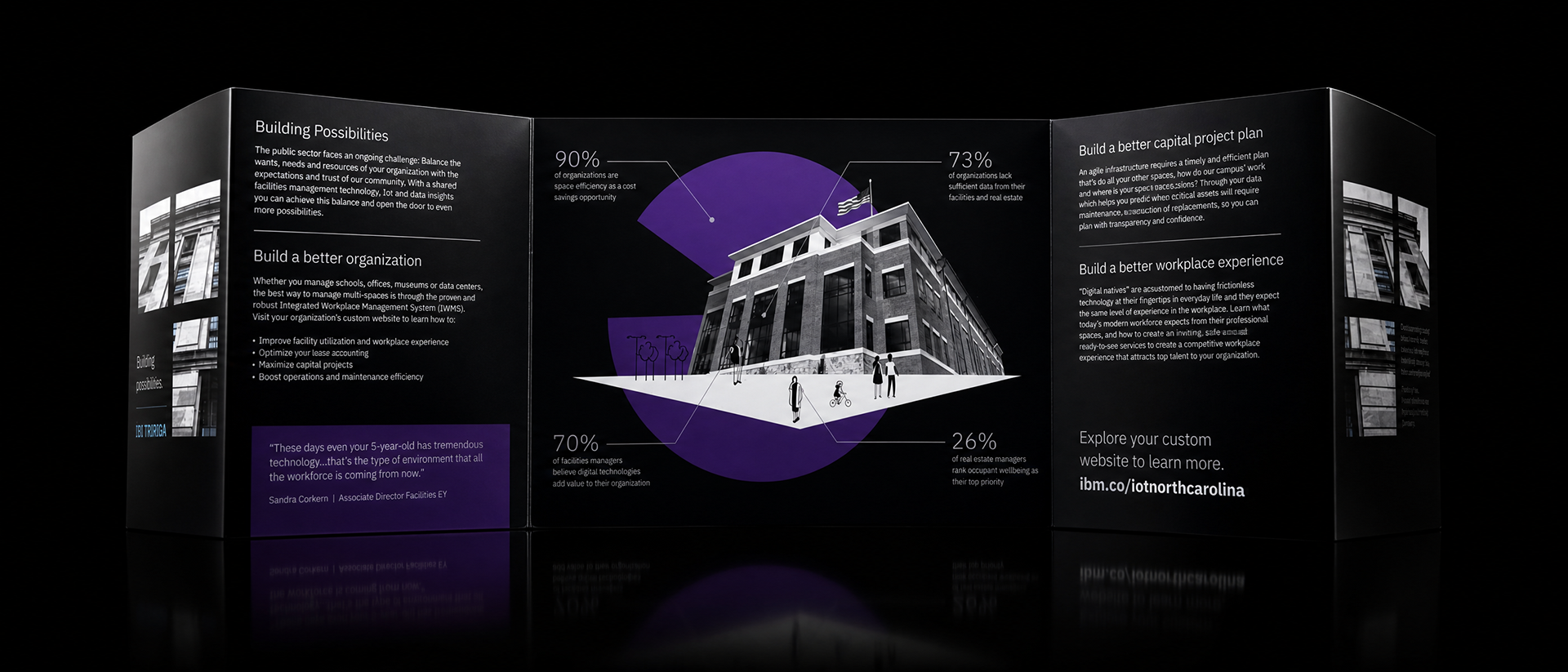
The video directs recipients to a personalized microsite, pre-populated with their account details and renewal options, designed to make saying yes frictionless.
How It Was Built
Every element of the box was designed to work in sequence. The exterior creates intrigue. The video activation rewards opening. The printed piece provides substance. The personalized URL removes every obstacle between engagement and conversion. Each layer exists to move the recipient one step closer, without ever feeling like a sales process.
The video content was produced at scale with personalization baked in from the start, allowing IBM to deploy the campaign across a targeted database of accounts while maintaining the feeling of something made specifically for that one person.
Built to travel, refined for where it lands
A global campaign is only as effective as its ability to speak locally. The Gorgon Point rollout demanded both the scale of a worldwide launch and the nuance of a message that felt native to every market it reached.
To solve this, we built automated deployment systems that could rapidly adapt and publish campaign assets across global regions, not through one-size-fits-all localization, but through bespoke creative refinement informed by the specific demographic and cultural requirements of each market.
The result was a campaign infrastructure as technically sophisticated as the product it promoted: intelligent, efficient, and precise in every market it entered.
"We didn't use AI to move faster. We used it to go further. Every decision, from the first idea to the last asset deployed, was sharper because of how we worked."
Gorgon Point represents a genuine step-change in how AMD campaigns are produced, and in what's possible when a creative team is willing to rebuild its process around new tools without losing the craft that makes the work matter.
It respects the audience's time by not wasting it. Decision-makers at enterprise accounts receive a constant stream of renewal communications. Most are ignored because they require effort before they deliver value. This box inverts that: the value is immediate and personal, before the recipient has done anything. That's a fundamentally different posture than a follow-up email.
Personalization at the point of surprise. Personalized marketing is everywhere. Personalized physical objects are not. Hearing your name from a screen inside a box you just opened is a genuinely different experience, and different experiences get remembered. The personalization isn't a tactic layered on top of the campaign. It's the campaign.
The box is the brand statement. IBM TRIRIGA is a platform built around managing high-value physical assets: buildings, facilities, and real estate portfolios. A physical object that is itself precision-engineered, considered in every detail, and performs exactly as intended is a product demonstration before a word is read. The medium makes the argument.
The microsite closes the loop. Most account-based campaigns create engagement and then lose it. The handoff from physical object to digital action is where renewals die. Directing recipients to a personalized site that already knows who they are and what they need removes that friction entirely.
The box gets them interested. The site gets the signature.