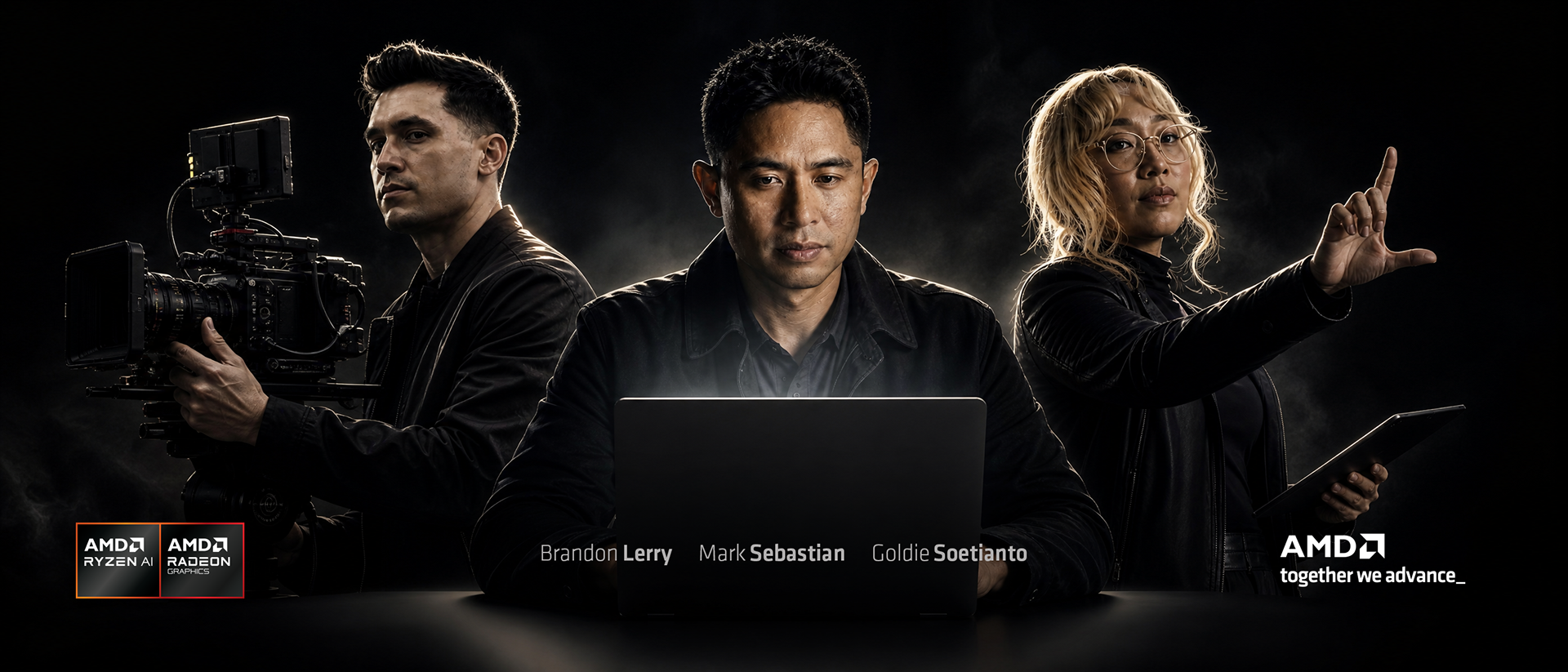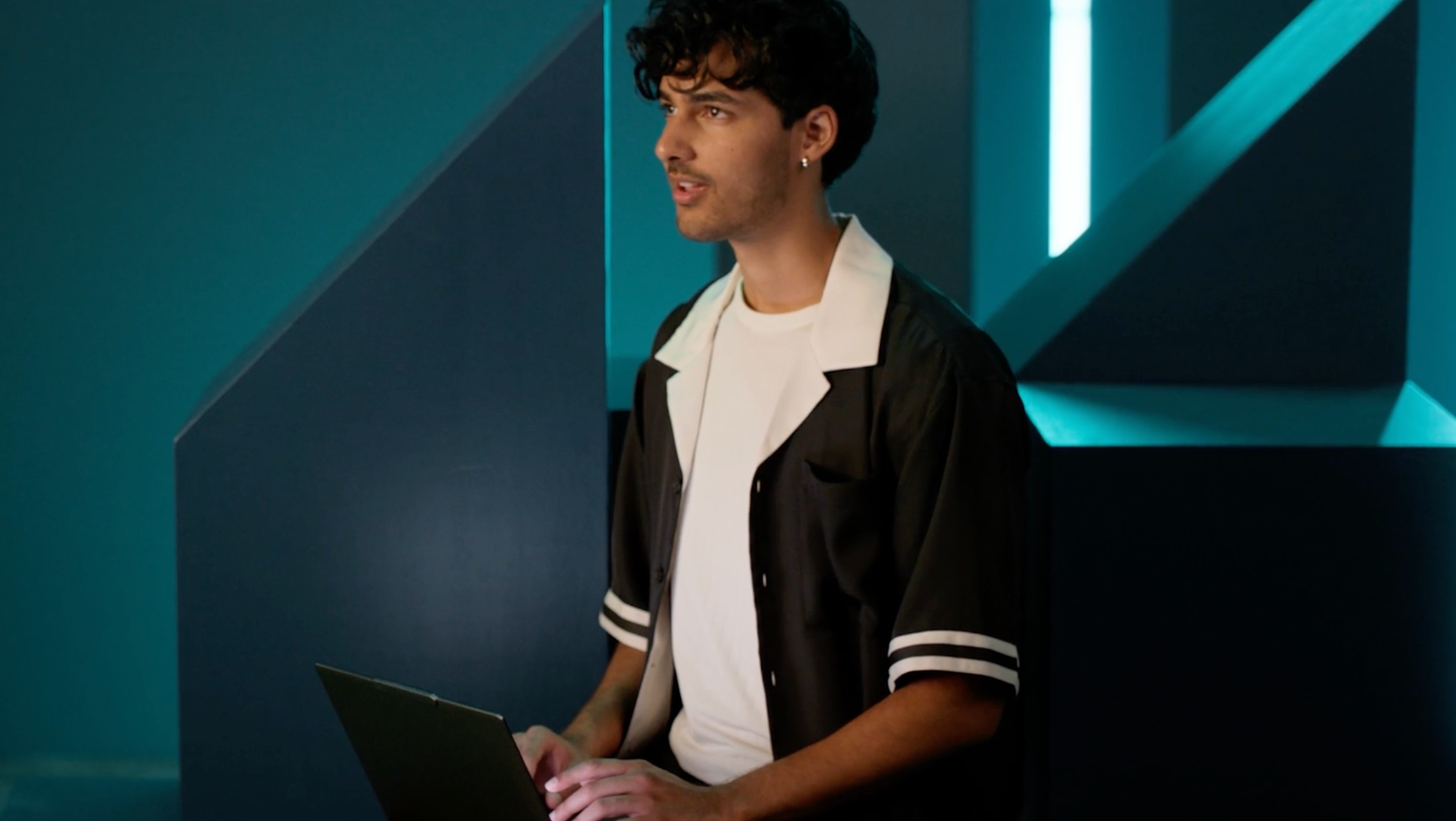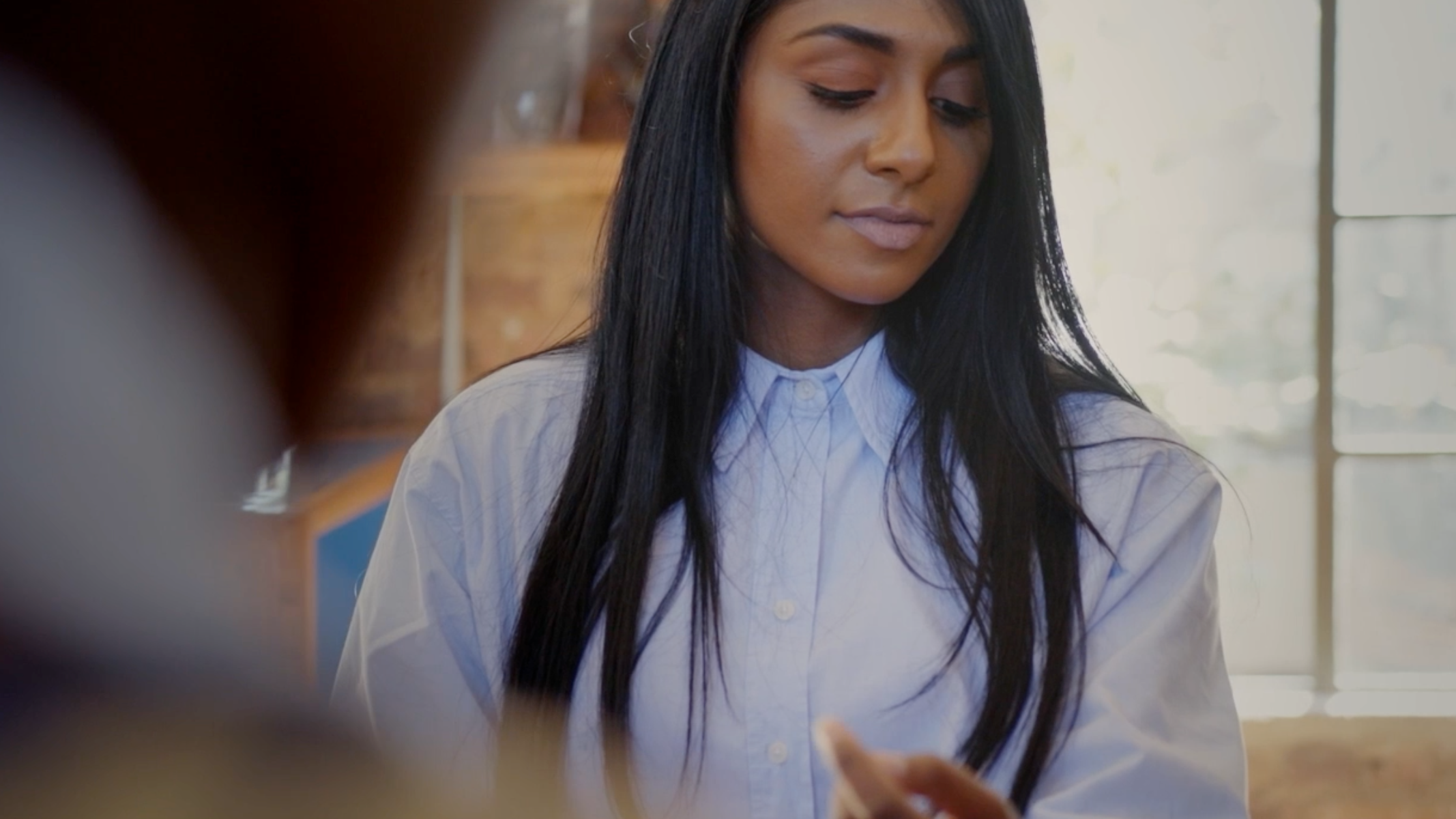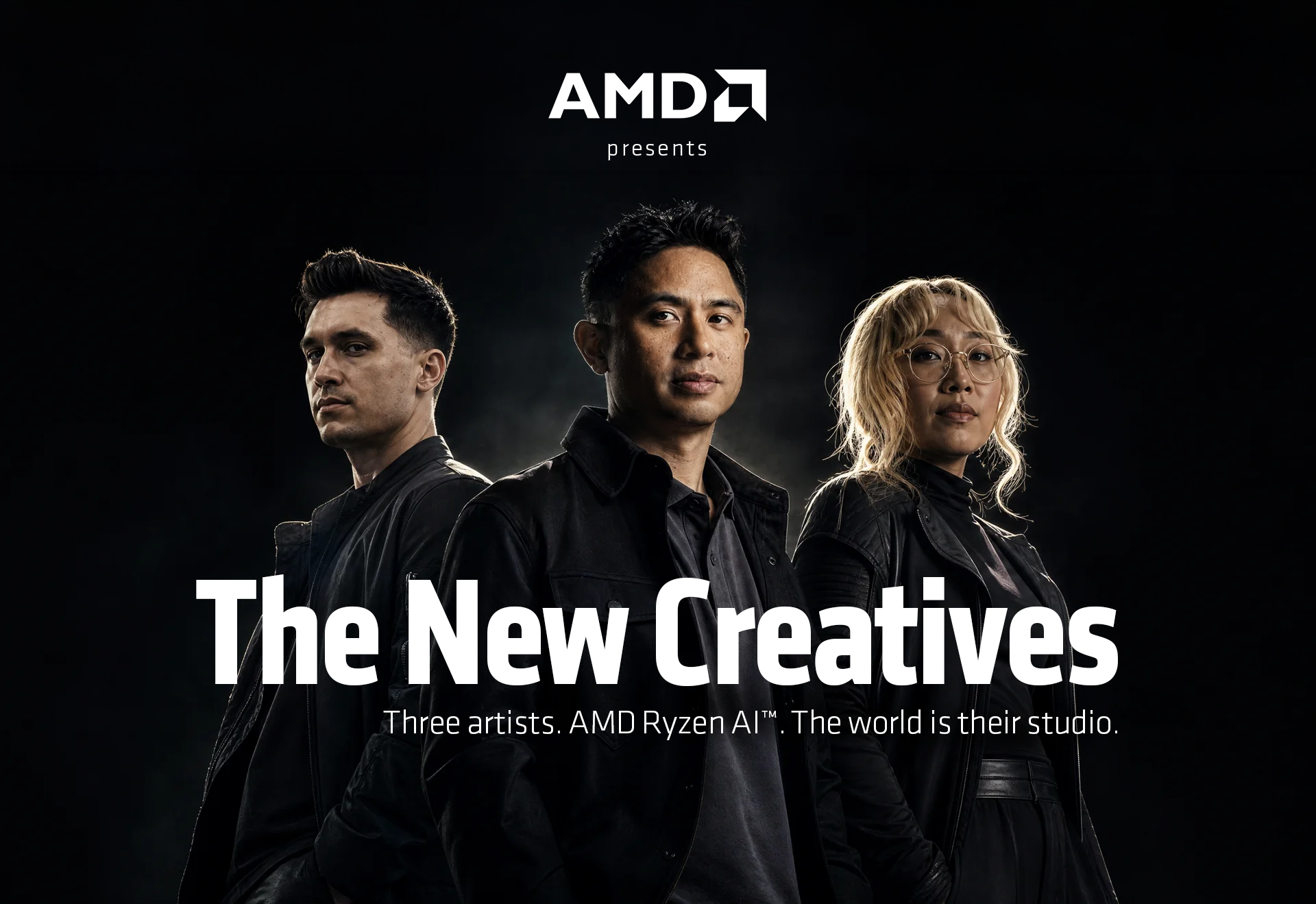
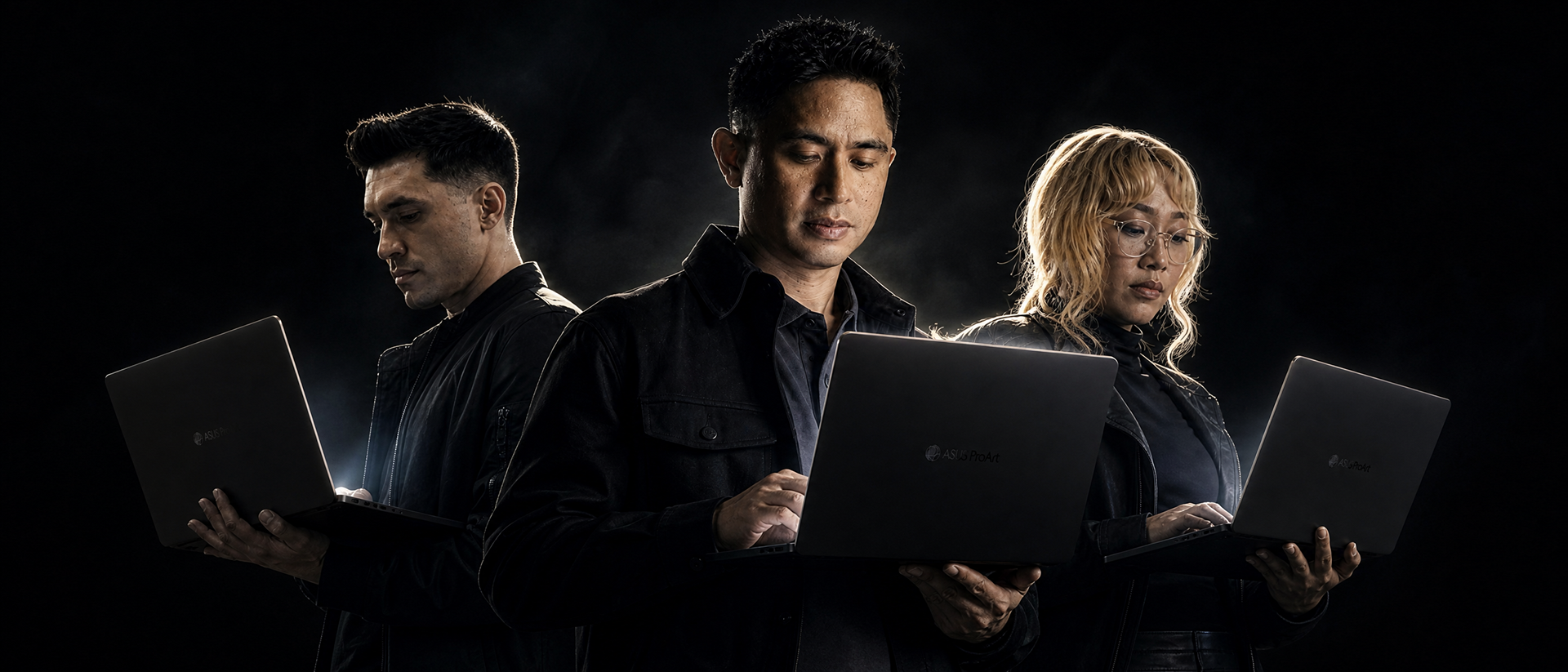
AMD wanted to show what's possible when elite hardware meets real creative work. I collaborated with three working artists: a 3D automotive designer, a cinematographer and colorist, and a video production duo, each pushing the edges of their craft with AMD Ryzen AI-powered machines. Rather than abstract performance benchmarks, these films tell the story of what it actually feels like to work without limits: rendering massive texture files on a laptop in a café, rotoscoping in DaVinci Resolve on a single battery charge, cleaning six-channel audio from a blown shoot, and saving a high-stakes theater deliverable. The throughput is real. So is the creative freedom it unlocks.
Brandon Larry | Lunchbox 3D
Brandon turned a viral spec-car ad into a full-time studio career and now runs the studio entirely from a laptop. Working in Adobe Substance 3D and Unreal Engine, he uses AMD Ryzen AI Max Pro to handle massive textures and multi-app workflows wherever he is. What used to require a desktop tower now fits in a backpack without compromise.
Goldie Soetianto | Dear Stalker Pictures
Sydney-based cinematographer and colorist Goldie built her entire production and post workflow around Blackmagic Design cameras and DaVinci Resolve Studio, and AMD Ryzen AI is what makes it portable. Magic Mask, face replacement, smart reframe for vertical social cuts: tasks that once required a dedicated suite now happen unplugged, on a single charge, anywhere.
Elevative Media I Mark Sebastian + Alex Vo
Mark and Alex built Elevated Media around the idea that AI is a creative tool, not a threat. After AMD-powered audio AI saved a live AMC theater shoot that went wrong, they went all in, using generative AI for storyboarding, pre-production visuals, and scripting. What used to take weeks to communicate now takes hours to build.
Three creators. Three workflows. One result:
When the machine keeps up, the work takes over.
The strategic problem this solves. Hardware brands live and die by specs that most buyers can't interpret. GHz, NPU teraops, neural processing cores: none of it means anything until someone shows you what it feels like to work on the machine. The brief here was to make AMD's Ryzen AI story tangible for a creative audience that is skeptical of marketing by default.
Why creators, not celebrities. The three talent featured are working professionals with real deadlines, real clients, and real consequences when tools fail. Brandon's car ad going viral, Goldie ordering cake while she color grades, Mark and Alex rescuing a blown AMC shoot: these are credible, specific, stakes-driven stories. Credibility is what gets through to a creative audience. Aspirational casting would have killed it.
Showing AI as a collaborator, not a threat. The conversation around AI in creative fields is loaded. This series makes a deliberate choice to show AI accelerating craft rather than replacing it: rotoscoping gets faster, materials generate smarter, and audio gets recovered. The artists stay in control. That framing matters enormously to the target audience, and it's threaded through every story.
One product, three proof points. Each video answers a different objection a potential buyer might have.
Brandon answers: Can it handle heavy 3D workloads?
Goldie answers: Can I actually go portable without sacrificing post quality?
Elevated Media answers: Is AI in production tools mature enough to trust for real jobs?
Together, they cover the room.
Format follows function. Short-form video is the right vehicle for a hardware story told through creators. It mirrors how this audience already consumes content, gives creators space to be themselves, and lets the work speak rather than a voiceover selling to them. The production aesthetic is intentionally elevated without being overproduced: it feels like content they'd watch, not an ad they'd skip.